11
RECONVERSIE WONING D&V
DeurleShelter in the forest
On a triangular, wooded lot in Deurle, a closed 1960s home was thoroughly renovated rather than demolished. The existing split-level structure and strong zoning offered enough quality to give the building a second life.
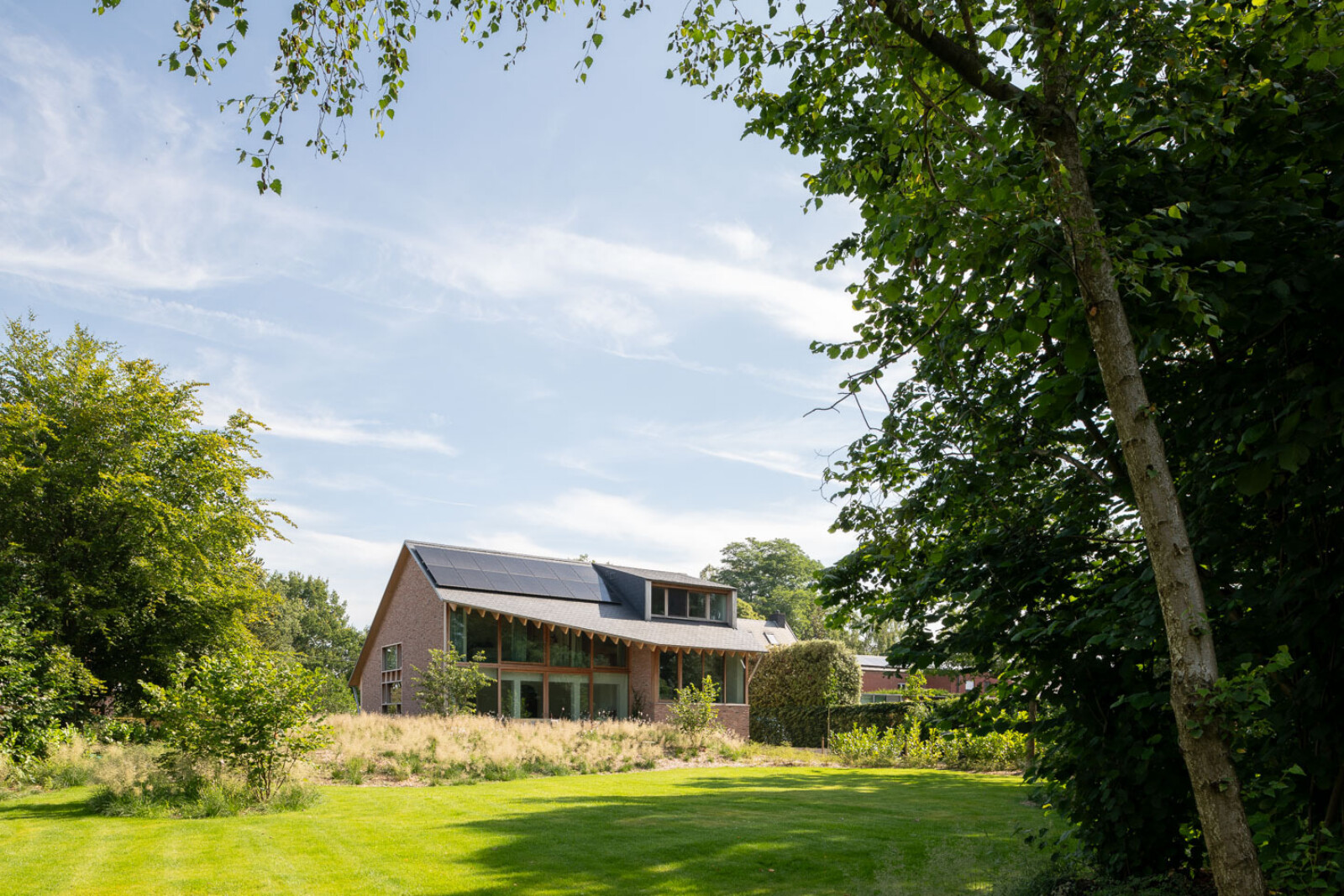
The house is slightly higher than the garden and deeper in relation to the street, creating a natural transition to the forest behind. The entire building envelope, interior and all technology were renewed. The energy label was upgraded from E to A.
The design opens the house to the greenery to the maximum, without losing intimacy. The rear façade was developed completely transparent and large sliding windows draw the forest deep into the interior.
The split-levels create spatial layering and strong sight lines between levels. The slender wooden roof with varying overhangs forms the main gesture and creates sheltered outdoor spaces.
The architecture is understated and honest, with a limited and sustainable material palette that blends into the natural surroundings.


Project information
| Project |
Project
Building a single-family home |
|---|---|
| Program |
Program Building a single-family house in the forest |
| Location |
Location
Hullekensstraat 24 9831 SING-MARTENS-LATEM |
| Builder |
Builder
private client |
| LINK LAB MEMBERS |
LINK LAB MEMBERS
US / STAY
|
| IN COLLABORATION WITH |
IN COLLABORATION WITH
Studio Basta |
| Site area |
Site area
7.478m2 |
| Ground intake |
Ground intake
177,67m2 |
| STATUS |
STATUS
Delivered 2023 |
Site
The house is located at the edge of the artists' village of Deurle, in a distinctly wooded area. The plot of 7,478 m² has a triangular shape and slopes slightly towards the forest behind. The garden gradually merges into a natural forest zone, blurring the boundary between private and landscape.
The existing vegetation is an important part of the site's identity. Tall tree canopies filter light and provide natural shade during the summer months. The site offers tranquility and privacy, but at the same time requires careful handling of light, views and scale.
The forest was restored where necessary with new pioneer vegetation, reinforcing the natural stratification of the landscape.
Layout
The original positioning of the house was retained as it intelligently responds to the topography. The volume stands slightly higher than the garden and slightly deeper in relation to the street, creating a natural transition between public and private space.
This slight elevation creates a panoramic perspective over the greenery from the living spaces. The split-level structure reinforces this relationship: each level has its own height experience and a different connection to the grounds.
At the front, the garden forms a green buffer to the street. At the rear, the house opens up completely to the forest, with large expanses of glass connecting up to the roof structure. Limited extensions were strategically planned so that they respect the existing volume and barely increase the footprint.
Pavements remain minimal and consist of reclaimed materials, maximizing the natural infiltration of rainwater.


Interior
The spatial structure starts from the existing split-level structure and reinforces the stratification of the house. The open stairwell forms the central connecting point and generates strong sightlines between the different levels.
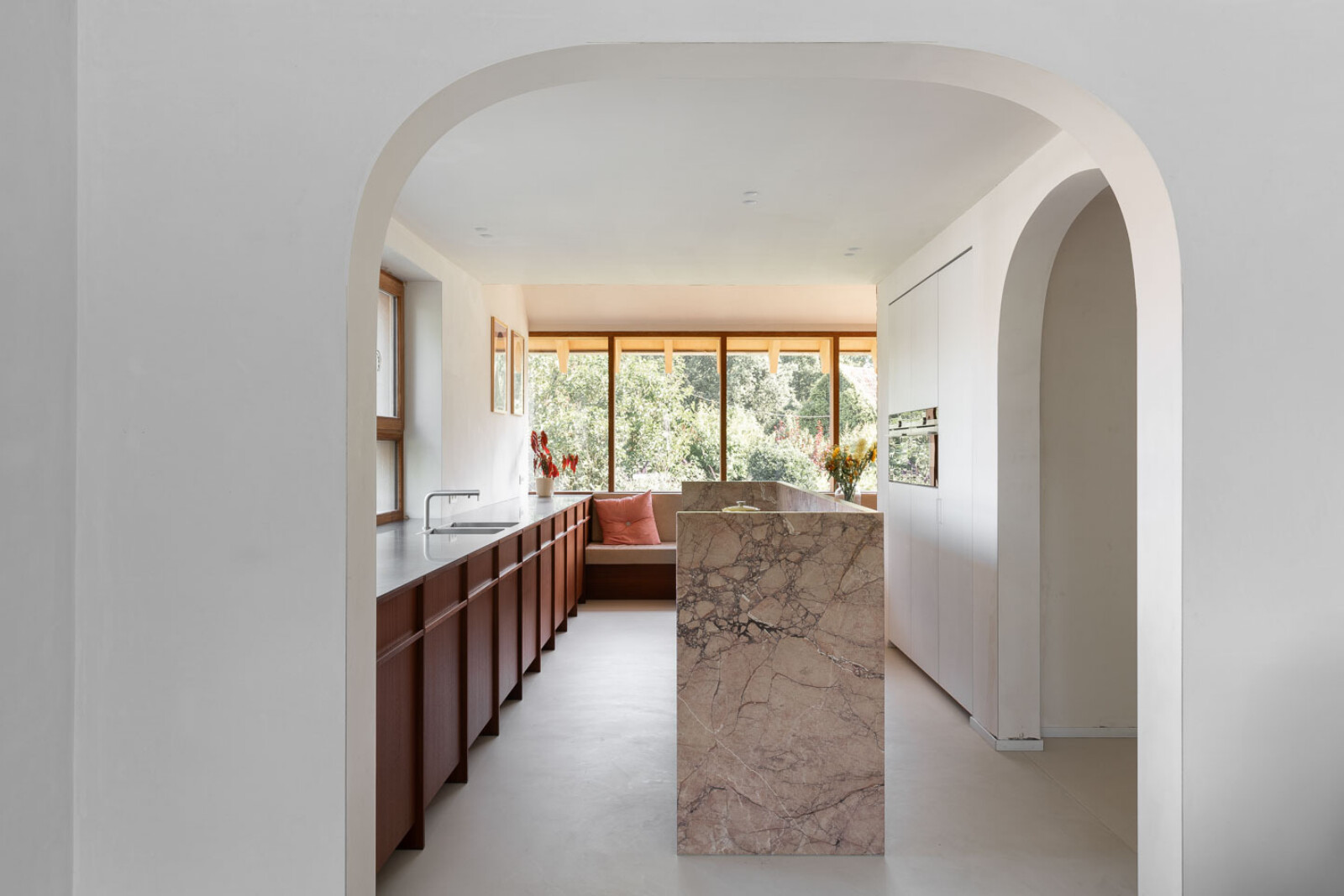
The living space looks out over the garden like a raised plateau, while the bedrooms nestle sheltered under the sloping roof. Large expanses of glass draw the forest deep into the house.
The material palette is understated and durable. Wood brings warmth, mineral surfaces provide tranquility. Inside and outside remain constantly connected.


Architectural choices
The pitched roof is the home's most pronounced architectural gesture. The slender wooden beams remain visible and enhance the sculptural simplicity of the volume. The varying overhangs all around create sheltered outdoor spaces and, together with the existing canopy, provide natural shade in summer.
The materialization is deliberately sober and sustainable. Localized facing brick, eco-labeled joinery, natural slates and natural zinc form a subdued color palette that blends into the wooded surroundings. By preserving the entire structural shell, the carbon footprint was significantly reduced and the original character of the house remained legible.
A future-oriented approach was also taken technically. A geothermal system with three boreholes feeds the heat pump that guarantees a stable indoor climate via underfloor heating and cooling. Solar panels and a home battery offset energy consumption, while ventilation ducts were discreetly integrated into the existing chimney. Rainwater is maximally reused via a large rainwater buffer.
Sustainability is not an add-on here, but a fundamental part of the design.

